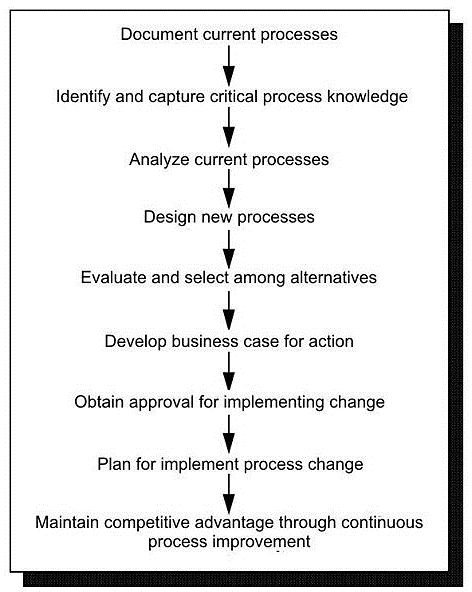
The Kaizen principle is a Japanese management philosophy which literally translates to continuous improvement. Kaizen helps to improve productivity of an organization simply by taking incremental steps towards continuous improvement.
What is the Kaizen Principle?
The concept of Kaizen can be explained as a principle of continuous improvement. According to the Kaizen philosophy , a series of small improvements made continuously over a long period of time can result in drastic improvement in business processes.
Origin of Kaizen
Kaizen, pronounced as “k-eye-zin,” literally means continuous improvement and the Kaizen principle originated from the Japanese philosophy of work. The concept of Kaizen became popular in the United States only by the late 1980’s. It was found that the performance of Japanese companies were much better than their American counterparts after applying the Kaizen principle.
Characterstics of Kaizen
As one of the most important aspects of Japanese quality, Kaizen is well-known for its characteristics. One of the main characteristic of Kaizen is on finding the root cause of mistakes made and correcting them. Kaizen practitioners are prepared to find even their own errors. Each error is seen as an opportunity in the path of improvement. Kaizen is more process-focused than results-focused. Kaizen also seeks to improve the systems rather than the human resources. In a Kaizen environment, when an employee errs in his job, it is not seen as an occasion to blame, but is seen as a chance to find out what went wrong with the process. Kaizen practitioners spend a lot of their time to measure customer satisfaction and error rates . They also make use of meetings and such opportunities to discuss avenues for improvement. Thus, Kaizen focuses on incremental improvements rather than exact solutions to problems. The focus of small improvements in Kaizen makes it easier to implement. Also, if the changes made in the business process are small, the people find it easier to adjust. Since most of the improvement proposals come from the employees, the resistance to change is much less. In fact, people tend to enjoy such a change. This is the way in which Kaizen principle helps to beat the competition. The Kaizen philosophy of work is to stress employee participation in decision making process. Every employee is considered as a link in the process of continuous improvement. Kaizen is not something which people do on an hourly basis. Instead, it is part of their lifestyle.
Difference between Kaizen and TQM
TQM (Total Quality Management) also has continuous improvement as one of its goals. But it is important to note that Kaizen and TQM are not the same. TQM has many practical benefits and emphasizes the use of various tools and techniques whereas Kaizen is more philosophical in its approach.
Limits and Risks
Kaizen is a tool that has to be used in a business environment which has long-term goals. Using the Kaizen principle need not resolve a particular problem completely and immediately. Thus, to implement the Kaizen philosophy, the practitioners need to be patient. Thus, the Kaizen principle is not meant for everyone.
Image Source
Richard J. Mayer, Ph.D and others: https://commons.wikimedia.org