Project management relies heavily on communication among the various stakeholders of a project. Harold Lasswell, a sociologist, created a model to explain how effective communications work. Here you will learn more about Lasswell’s nature of communication and how it relates to project management.
An Introduction to Lasswell’s Theory
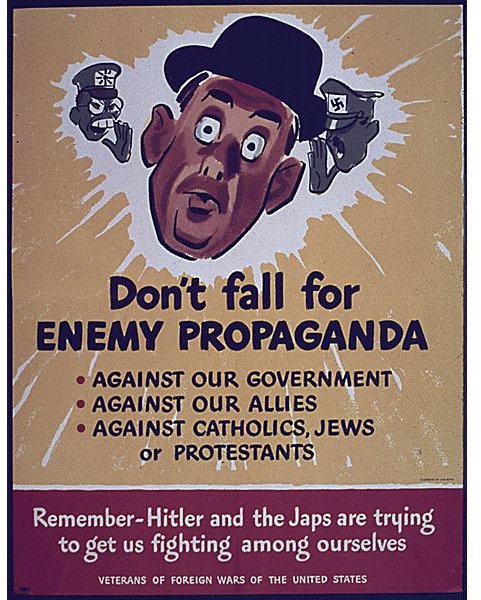
Lasswell’s theory of communication dealt largely with political propaganda , a term not ordinarily used in project management. The
political warfare associated with propaganda may not always be appropriate when working on a project, although opposition to constructive ideas may sometimes arise that must be dealt with in order to promote the flow of the project. Because of this, communication with internal and external stakeholders may need to influence their attitudes in order to improve the viability of the project.
Lasswell’s nature of communication theory relates to project management much as it does for most of our general communication: sometimes facts need to presented in certain ways to encourage certain outcomes from the audience. Presumably, factual communication in project management is preferred, but the Lasswell theory can clearly help get things done when a certain impact is necessary.
Image Credit: Wikimedia Commons/Raul654
The Lasswell Model: An Overview
Although Lasswell’s nature of communication model is accurate and useful in many ways, it is both powerful and dangerous. It is powerful because four variables can be manipulated to create a desired impact. Dangerous because of its implications on human liberty. A telling statement by Lasswell was published in the International Encyclopedia of Social Sciences saying,
We should not succumb to democratic dogmatism about men being the best judges of their own interests. They’re not. We’re the best (Olson and Faigley 1991, 83).
Because the motivation of Lasswell comes from a desire to control people through propaganda and to force obedience to the ruling elite as it were by force, the implications of his theory are unnerving, especially for those who are unaware of its impetus.
The essence of Lasswell’s communications model is this:
- Who (the sender)
- Says what (the message)
- In what form (the media)
- To whom (the audience)
- With what effect (the impact)
To achieve the desired impact, the sender, the message, the media, and the audience must all be properly selected. As an example, consider a persuasive orator who chose written media to communicate: the impact would probably not be the same had he spoken the message, although even then the message would not have been effective if it did not reach the correct audience. This basic model seems to be very prevalent in our society, with mass media continuing to operate by its guidelines.
For Lasswell’s nature of communication theory to work, much research is required. First the desired effects must be understood. Then the audience must be research to determine what must be said, in what way, by whom to get them to react as desired. The Nazi’s picked up on Lasswell’s thoughts and perfected them as they ascended to power and led Germany into war.
Generally speaking, the weakness of the Lasswell model is found in its linear nature and in its superficial treatment of context. Still, the model summarizes the process of using communication to manipulate outcomes that it is still widely used today.
Lasswell and Project Management
Lasswell’s nature of communication applied to project management is simply this: sometimes to get things done, the communicator, the message, the medium, and the audience must be carefully researched and selected to accomplish key goals of the project. Similarly, all project stakeholders should guard against propaganda to ensure that they are not manipulated into compromising moral principles and project goals.
Source
Olson, Gary A., and Lester Faigley. “Language, Politics, and Composition: A Converation with Noam Chomsky.” In (Inter)views : Cross-disciplinary Perspectives On Rhetoric and Literacy, by Gary A. Olson, 83. Carbondale, Ill.: Southern Illinois University Press, 1991.